Why Fast Fire Damage Cleanup in South New Jersey Prevents Permanent Damage
Soot corrodes surfaces within hours. Learn why fast fire damage cleanup in South New Jersey saves your home. IICRC-certified team on call 24/7.
Once a fire has been extinguished by local fire departments, it is easy to assume that the immediate danger to your home or business is over. However, the recovery phase introduces a secondary, silent threat: the chemistry of smoke and soot. Smoke is not simply harmless ash; it is a highly complex, airborne mixture of acidic gases, carbon soot, and microscopic chemicals released when building materials, synthetics, and household goods burn. Understanding the chemistry of soot explains why rapid fire damage cleanup south new jersey is vital to saving your property from permanent, irreversible damage.
The Acidic and Corrosive Nature of Soot
When synthetic fibers, plastics, wood, and drywall burn, they release chemical compounds that, when combined with moisture in the air, form highly acidic residues. Soot particles carry these acidic compounds, settling on every exposed surface. Because soot is acidic, it immediately begins a chemical reaction with the materials it contacts. The severity of the corrosion depends entirely on time. The longer soot remains on a surface, the deeper the chemical damage penetrates.
The Corrosion Timeline: How Soot Destroys Materials
The timeline of soot damage is aggressive and follows a strict progression:
- Minutes: Porous materials absorb fine soot particles immediately. Plastics, laminate surfaces, marble, and alabaster begin to yellow and discolor. Once these materials absorb the acidic oils, the staining is permanent and cannot be cleaned.
- Hours: Unfinished metal surfaces tarnish, rust, and corrode. Grout between wall and floor tiles discolors permanently. Household appliances and electronics may experience sudden failures as fine, conductive soot settles on internal circuit boards, causing electrical shorts.
- Days: Painted drywall discolors and yellows permanently, requiring complete replacement rather than just repainting. Wood furniture and cabinets absorb the acidic residue, causing finishes to warp, bubble, or peel. Metals like brass, chrome, and aluminum experience severe etching and pitting, ruining their appearance.
- Weeks: Upholstery, carpets, and clothing fibers rot and decay from prolonged exposure to acidic compounds. The cost of restoring the property rises exponentially as items that could have been saved with quick cleaning must now be discarded and replaced.
Immediate fire damage cleanup nj halts this corrosion before it becomes irreversible, preserving your finishes and saving thousands of dollars in replacement costs.
The Four Major Types of Smoke Residue
Professional fire restoration is not a one-size-fits-all process. Cleanups must target the specific type of smoke residue left behind, as each requires a different chemical approach:
- Dry Smoke Residue: Resulting from fast-burning wood or paper fires, this soot is powdery, dry, and relatively easy to clean. However, it easily becomes airborne, spreading into insulation, ductwork, and wall cavities.
- Wet Smoke Residue: Produced by slow-smoldering, low-heat fires (often involving rubber, plastics, or synthetics). Wet smoke soot is sticky, smeary, and carries a highly pungent odor. Attempting to wipe this soot with household cleaners will only smear it, setting the stain permanently.
- Protein Smoke Residue: Caused by kitchen grease and food fires. This residue is virtually invisible but leaves an extremely strong, oily smell. It discolors varnishes, lacquers, and paint, and requires specialized enzymes to dissolve.
- Fuel Oil Soot: Commonly caused by furnace malfunctions or furnace puff-backs. This greasy, heavy soot coats walls and furniture in a thick black film, carrying a heavy fuel smell.
Eliminating Smoke Odors at the Molecular Level
Smoke doesn't just settle on surfaces; it penetrates porous building materials like drywall, wood framing, insulation, and carpets. Simple ventilation, ozone sprays, or household air fresheners will not solve the problem; they only mask the odor temporarily, allowing it to return on humid days. Professional fire restoration requires specialized, scientific deodorization techniques:
- Ozone Deodorization: Ozone generators release ozone gas (O3), which chemically reacts with smoke molecules, oxidizes them, and neutralizes the odor permanently. This process must be performed in an evacuated structure.
- Thermal Fogging: Thermal foggers heat a specialized deodorizing compound, turning it into a fine mist. Because the particles are heated, they expand and behave exactly like fire smoke, entering the same microscopic pores in drywall and wood to neutralize trapped odors at the source.
- HEPA Air Scrubbing: High-efficiency particulate air (HEPA) scrubbers run continuously during the cleanup process, filtering out microscopic soot spores and particulates from the indoor air.
Why DIY Cleanup Fails and Increases Costs
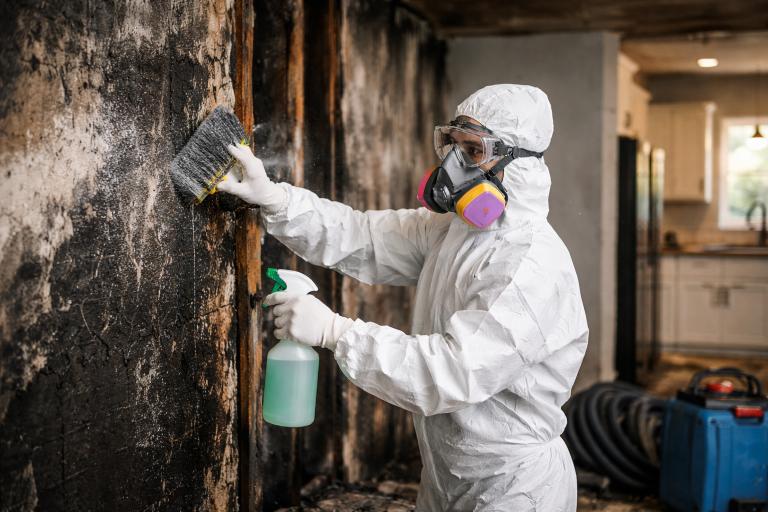
Many property owners attempt to clean fire damage themselves to save money. However, DIY cleanup often leads to higher costs. Using the wrong cleaning chemicals can react with acidic soot, creating a permanent chemical bond that ruins walls and furniture. Furthermore, vacuuming soot with a household vacuum cleaner spreads fine particles back into the air and deep into carpets, magnifying the odor problem. Finally, the health risks of inhaling soot particles without professional respirators are significant.
A&M Damage Solutions LLC is an IICRC-certified restoration contractor based in Toms River. We use advanced thermal imaging, moisture mapping, and testing kits to identify all soot-damaged areas. Our team coordinates directly with your adjuster, performing professional soot removal nj using safe, green, and highly effective cleaning agents. We offer direct insurance billing to make the restoration process seamless, helping NJ homeowners return to a safe, clean, and odor-free home.
Need Professional Fire Restoration?
Learn more about our fire damage restoration services in NJ →